Short answer: Good homestead land for animals in Texas has four things: a water plan, room to fence, legal road access and deed rules that allow livestock. Our listed tracts note livestock as an intended use; confirm the rules for the specific tract with our team before you buy. On West Texas native grass, plan on far more land per animal than in East Texas, and plan to feed hay on a small tract.
Most families shopping for homestead land for sale have a picture in mind: a few laying hens, a pair of goats, a horse for the kids, maybe a couple of steers. Whether that dream fits on 10 acres depends on the animals, available feed and water, suitable fencing, tract rules and applicable stock laws. The question is what the land has to offer for it to work, and how many animals the ground can actually carry before you are buying every bite of feed.
This guide covers what to look for in homestead and livestock land, how Texas A&M AgriLife and Texas Parks and Wildlife count animals per acre, what "open range" means in Texas, the tax side, and where Victory has animal-friendly land near Lubbock, Amarillo, Corpus Christi and the Rio Grande Valley. If you already own land and want the step-by-step first year, read our first-year livestock setup plan.
Find animal-friendly land in person
Every Victory buyer walks the land before buying. Tell us what animals you plan to keep and we will show you tracts that fit.
Book a land tour Call or text 806-606-0824Homestead land: what to look for
A listing photo shows grass and sky. What you need to know is underneath and around it. Before you fall in love with a view, check these four things on any tract you are considering.
Water
Animals need water every day, and a lot more of it in July than in January. Most raw land in West and South Texas has no well yet, so ask how you will get water to the tract: drill a well, connect to a water supply corporation where one serves the road, or haul water while you get set up. On Victory tracts, a well is required, and a few lots already have one. Yolanda Farms lists tracts #5 and #8 as having a well. For depths, permits and groundwater districts near Lubbock, read our West Texas water wells guide.
Fencing
Fence is usually the biggest early cost for a livestock homestead. Ask whether the tract has any fence today and whether it is in usable shape, and plan to walk the boundary with the survey in hand. Fencing status varies by tract, so ask our team about the one you like. Texas A&M AgriLife's livestock guide for owners of small tracts recommends a permanent perimeter fence of at least five barbed wires for cattle, with seven wires or 48-inch net wire with barbed wire above it preferred, and it notes that electric fence works for inside partition fences but not for the perimeter.
Access
You will be pulling a stock trailer and taking hay deliveries. A paved county road or a well-kept caliche road matters more with animals than without them. Every Victory tract page names its road. Make sure the gate spot gives a trailer room to swing in.
Deed rules and county rules
Some subdivisions ban livestock outright or limit the number of animals. Our listed tracts note livestock as an intended use, but that does not establish permission for every tract or animal. Confirm the rules for the specific tract with our team and review its written deed restrictions before you buy. County rules still apply. If you are comparing open land to a restricted subdivision, our post on open land vs deed-restricted land in Texas explains what to read for.
How many acres per animal in Texas?
Ranchers measure grazing in animal units. One animal unit is roughly a 1,000-pound cow, with or without a calf at her side. Texas A&M AgriLife says one animal unit eats about 26 pounds of forage a day. Other animals are counted as a share of that.
Animal unit equivalents
These figures come from Texas A&M AgriLife's livestock guide for owners of small tracts and Texas Parks and Wildlife's livestock management recommendations.
| Animal | Animal units (about) | Head per animal unit |
|---|---|---|
| 1,000-lb. cow | 1.0 | 1 |
| Horse | 1.0 to 1.5 | 1 or less |
| 500-lb. stocker calf | 0.6 | about 1.7 |
| 100-lb. goat doe | 0.15 | about 7 |
| 80-lb. hair sheep ewe | 0.12 | about 8 |
West Texas stocking rates
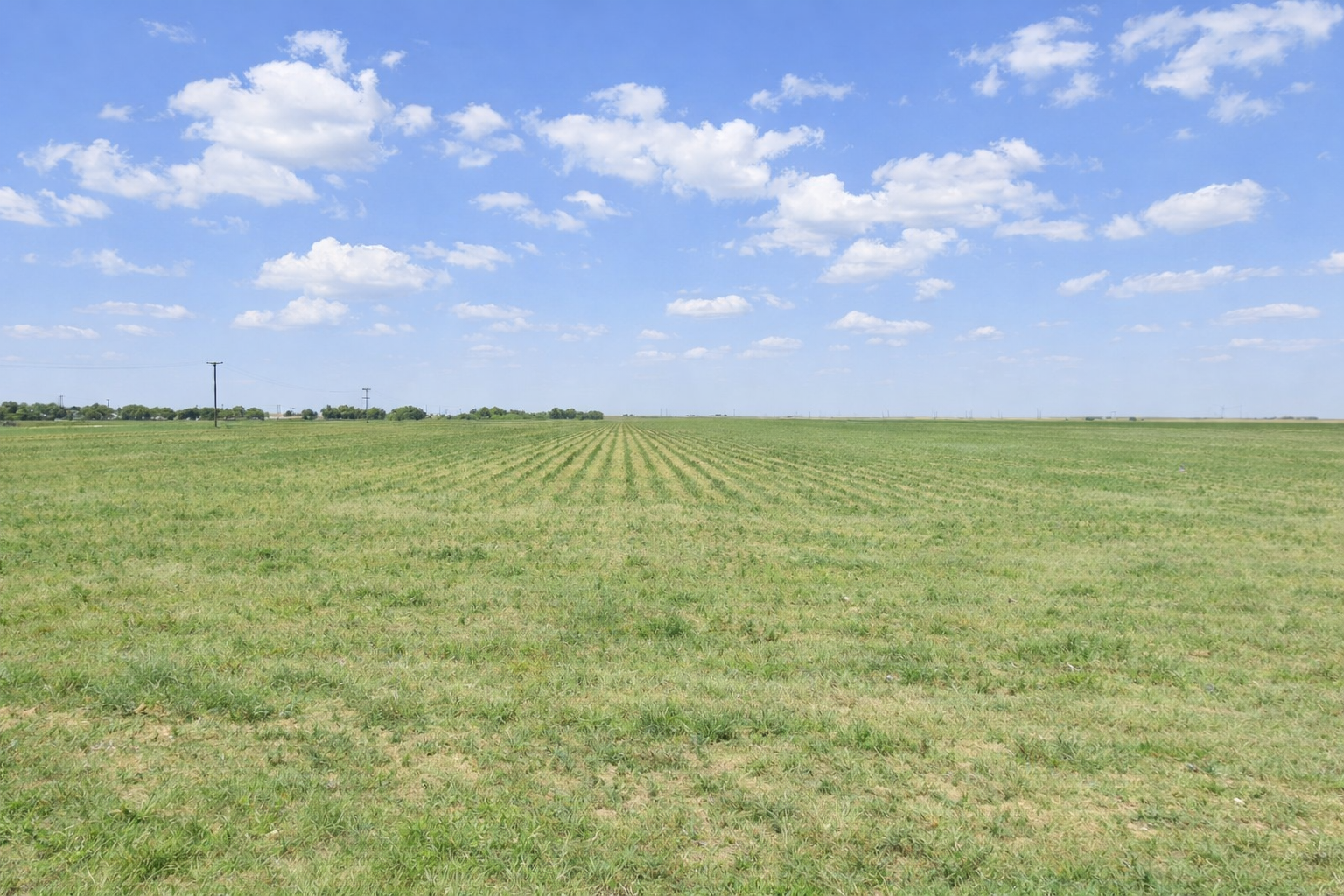
Texas Parks and Wildlife gives a rule of thumb for native grassland in the High Plains and Rolling Plains of Texas: about 1 animal unit per 35 to 40 acres year-round. Rainfall, soil and grass condition move that number, and only the land that actually grows forage counts. AgriLife adds that owners of small tracts usually overestimate how many animals their land can carry, and it suggests asking your county Extension agent or the USDA Natural Resources Conservation Service office for a county-specific number.
Here is what that means in plain terms. On 10 acres of native West Texas grass, the ground alone will not feed even one cow all year. Keeping a cow or a horse there may be possible if tract rules and applicable stock laws allow it and you can provide adequate feed, water and suitable fencing. Plan to feed hay and buy feed, and treat the pasture as exercise room and a supplement, not the whole diet. Goats, sheep and poultry fit small tracts more easily because each animal eats far less.
Homestead land checklist
- Water plan: well, water supply corporation or hauled water to start.
- Fence: what is there today, and what it will take for your animals.
- Access: a road and gate a stock trailer and hay truck can use.
- Deed rules: livestock allowed, and the written restrictions in hand.
- County stock law: open range or closed range for your animals.
- Feed math: how many animals the grass carries, and how much hay to buy.
Open range vs closed range in Texas
Texas is open range by default. The Texas Association of Counties explains that unless a local stock law applies, livestock are not legally required to be fenced in. Chapter 143 of the Texas Agriculture Code lets voters in a county, or in part of a county, hold an election to stop certain animals from running at large. There are separate elections for cattle and for horses, mules, donkeys, hogs, sheep and goats, so a county can be closed range for one kind of animal and open for another.
Why it matters to you: in a closed-range area, the owner of those animals must keep them from running at large. In open range, a landowner who wants to recover for damage from a neighbor's livestock is generally expected to have a sufficient fence. Under Chapter 143, a sufficient fence in a stock-law area is at least four feet high, and a barbed wire fence needs three wires on posts no more than 30 feet apart with stays between posts. State law also has separate rules about livestock on highways. Call the county clerk or county judge's office where the tract sits and ask what stock laws apply to the animals you plan to keep.
Ag valuation for livestock
Texas lets qualifying land be appraised on its agricultural use instead of market value, which can lower property taxes. Livestock can be a qualifying use, but each county appraisal district sets its own standards, such as minimum acres, how many animals, and how long the land has been in agricultural use. A tract that had no history of ag use may not qualify right away. Read our guide to ag valuation on 10 acres in Texas and call the appraisal district before you count on it. Buy land for the life you want on it, then work through the tax paperwork with the county.
Animal-friendly land by market
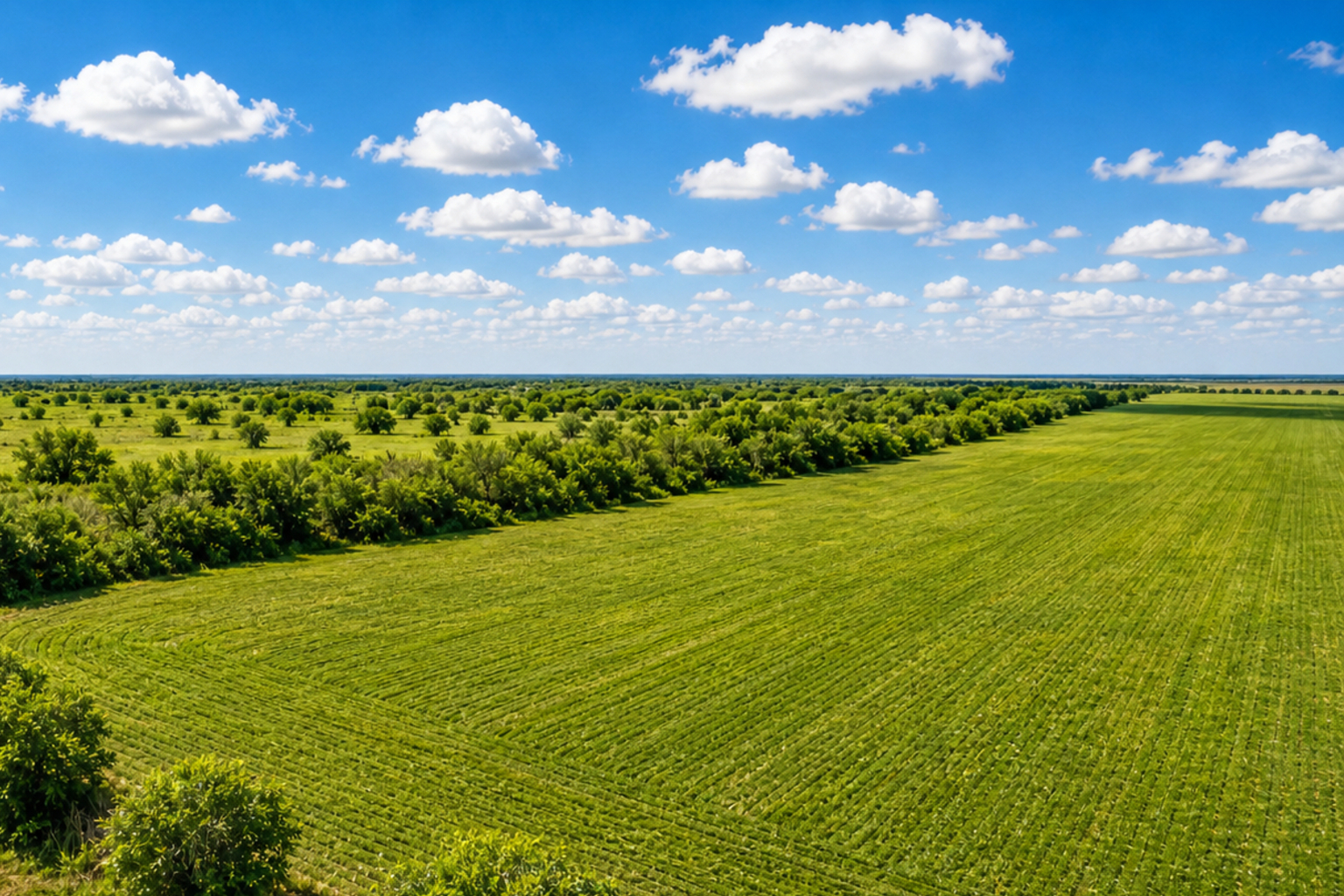
Every tract below lists livestock among its intended uses. Sizes and road access come from the live tract pages. Ask us which lots are still open before you plan around one.
| Tract | Market | Tract sizes | Water |
|---|---|---|---|
| Amarillo East | Amarillo | 10 acres | Well required |
| Hockley Farms | Lubbock area (Levelland) | 2.5 and 10 acres | Well required |
| Yolanda Farms | Lubbock area (New Home) | 10 acres | Tracts #5 and #8 have a well |
| Victory Ranch | Corpus Christi (Orange Grove) | 10 and 11.8 acres | Well required |
| Rancho La Victoria | Rio Grande Valley (Santa Rosa) | 10 acres | Well required |
Lubbock and the South Plains
Flat, open ground makes long fence runs simple, and wind and summer heat make shade and a windbreak the first build. Compare markets on the Lubbock hub or read our Lubbock land guide.
Amarillo and the Panhandle
Amarillo East sits about 15 minutes southeast of Amarillo on a county road in Canyon ISD. Panhandle winters are colder and windier than the rest of our markets, so plan shelter and a way to keep water from freezing. See the Amarillo area hub and our Amarillo land guide.
Corpus Christi and the Coastal Bend
Heat and humidity put shade and water first. See the Corpus Christi hub and our Corpus Christi land guide.
Rio Grande Valley
Rancho La Victoria is about 15 minutes from Harlingen. Long, hot summers make water and shade the planning priority. See the Rio Grande Valley hub.
Buying homestead land with owner financing
Owning your own land is easier than you think. You can pay cash, use a loan from your own lender, or use owner financing from Victory Land Sales. Ask our team about current owner-financing terms and requirements. Your deed is recorded in your name at closing, and Victory holds the lien until the land is paid off. Each tract page shows its own terms. For the full walkthrough, read how owner financing works on land in Texas or see our owner financing process.
Victory Land Sales is veteran-owned. Every buyer tours the land before buying, which is the best time to check the road, the gate spot, where a barn would sit and where water would come from.
Ready to walk land for your animals?
Book a land tour near Lubbock, Amarillo, Corpus Christi or the Rio Grande Valley.
Book a land tour Call or text 806-606-0824See Available Land
Owner-financed tracts across Texas that list livestock and homesteading among the intended uses.
Frequently asked questions
How many acres do I need for a horse in Texas?
It depends on rainfall and grass. Texas Parks and Wildlife's rule of thumb for native grassland in the High Plains and Rolling Plains is about 1 animal unit per 35 to 40 acres year-round, and a horse counts as 1 to 1.5 animal units. Keeping a horse on a 10-acre tract may be possible if tract rules and applicable stock laws allow it and you provide adequate feed, water and suitable fencing; do not count on native grass alone. Your county Extension agent can give a local number.
Can I keep livestock on Victory Land Sales tracts?
Our listed tracts note livestock as an intended use; this is not a promise that every tract permits every animal. Confirm the rules for the specific tract with our team and review its written deed restrictions before you buy. Applicable county stock laws still apply.
What is open range in Texas?
Texas is open range by default, which means livestock are not legally required to be fenced in unless a local stock law applies. Under Chapter 143 of the Texas Agriculture Code, a county or part of a county can vote to stop certain animals from running at large. Ask the county where the tract sits which stock laws apply to your animals.
Is homestead land in Texas eligible for an ag valuation?
It can be. Livestock can be a qualifying agricultural use, but each county appraisal district sets its own standards, including minimum acres, animal numbers and how long the land has been in ag use. Call the appraisal district before you count on it.
Where can I buy homestead land with owner financing in Texas?
Victory Land Sales offers owner-financed land near Lubbock, Amarillo, Corpus Christi and the Rio Grande Valley. Browse available land at victorylandsales.com/properties and book a land tour, since every buyer sees the land in person.
Want help picking land for your animals?
Tell us what you plan to keep. Our local team will walk the land with you and answer questions about water, fence lines and access.
Book a land tour Call or text 806-606-0824Follow Victory Land Sales


New land, buyer tips and stories from the field.
About the author
Bo “Knows Dirt” Birkeland, VP of Victory Land Sales
Bo Birkeland is all about land (it's in his name!), real estate, and helping people find their perfect spot to call their own. As the sales leader of Victory Land Sales, he connects buyers with great properties, whether for building, investing, or just having a place to escape. He knows firsthand the freedom that comes with owning land and loves helping others find their own slice of it.