
Short answer: Owner financing is legal in Texas. Texas law sets notice rules for land sales and adds extra buyer protections for contracts for deed on land used as a home. If the seller gives you the deed at closing and holds a lien, those contract-for-deed rules generally do not come into play. Either way, have a Texas attorney or title company read the contract before you sign.
Owner-financed land is one of the most common ways Texans buy rural land, and it is also where buyers have the most questions. Is it legal? What does the seller have to tell me? What happens if I miss a payment? This guide walks through what the Texas Property Code actually says, in plain English, with the section numbers so you can read the law yourself. It ends with a checklist you can take to any seller, including us. It is general information, not legal advice.
Read the land and the paperwork together
Every Victory buyer tours the land in person. Bring your questions about the contract, too.
Book a land tour Call or text 806-606-0824Two ways owner financing is set up in Texas
“Owner financing” describes who lends the money, not the paperwork. In Texas, a seller-financed land sale is usually set up one of two ways, and the difference decides which rules protect you.
1. Deed at closing, seller holds a lien
The seller signs a deed to you at closing, and the deed is recorded with the county clerk. You own the land from day one. The seller keeps a lien on it until you finish paying, much like a bank would. This is how a Victory purchase works.
2. Contract for deed (executory contract)
You sign a contract, move in or start using the land, and make payments, but the seller keeps legal title. You get the deed later, often only after the last payment. The Property Code calls this an “executory contract for conveyance.” It is legal, but Texas wraps it in extra rules because buyers under these contracts have lost land and payments in the past.
For a deeper side-by-side, read our guide to warranty deeds vs contracts for deed in Texas.
Notices that come with Texas land sales
Some seller notices apply to land sales whether or not the seller is financing. These are the three most land buyers will run into. Each one has its own exceptions, so read the section itself.
- Possible additional taxes (§5.010). A contract to transfer vacant land must include a bold notice explaining that if the land is appraised under a special method, such as an agricultural valuation, you may not be able to keep that valuation and a change in use can trigger additional taxes. Our ag valuation guide for 10 acres explains rollback taxes in more detail.
- Possible annexation (§5.011). Most sellers must give you a written notice that land outside city limits may now or later fall within a city's extraterritorial jurisdiction, or be annexed. If you sign without it, you may back out within seven days after you receive the notice, or until the transfer, whichever comes first.
- Pipelines on unimproved land (§5.013). A seller of unimproved land to be used for residential purposes must disclose the location of any transportation pipeline, such as a natural gas or petroleum line. There is an exception when the seller must provide a title commitment and you can end the contract over title objections. You can also look at pipelines yourself on the Railroad Commission of Texas public GIS viewer.
Extra protections for contracts for deed
Subchapter D of Chapter 5 of the Texas Property Code is where most of the buyer protections live. Before relying on any of them, check whether they apply to your sale.
When the contract-for-deed rules apply
Under §5.062, the rules apply to an executory contract for land used or to be used as the buyer's residence, or the residence of a close relative. A lot of one acre or less is presumed residential, so on a larger tract the question is how you plan to use it. The rules do not apply to sales of state land or land sold by the state and certain public entities. They also do not apply when the contract calls for the seller to deliver a deed within 180 days of signing, which is one reason a deed-at-closing sale works differently.
What the seller must give you, and what you can do
Here is the subchapter in plain English. The table is a summary; the statute is the final word.
| When | What the law requires | Section |
|---|---|---|
| Before you sign | Survey from the past year (or a plat of a current survey), copies of any document that affects title such as easements and restrictive covenants, and a signed property-condition notice | §5.069 |
| Before you sign | A tax certificate for the property and a copy of any insurance on it | §5.070 |
| Before you sign | A written statement of the financing terms, including the price, the total you will pay over the contract and any late charge | §5.071 |
| In the contract | No side deals: the written contract is the whole agreement, with a bold notice saying so | §5.072 |
| In the contract | Limits on late charges, no prepayment penalty, and no ban on borrowing against your stake in the land to add improvements such as utilities | §5.073 |
| After you sign | You can cancel for any reason within 14 days, and the seller must return your payments | §5.074 |
| After you sign | The seller must record the contract with the county within 30 days | §5.076 |
| Every January | An annual statement showing what you paid, what you owe and how many payments are left | §5.077 |
| If you fall behind | Written default notice by certified or registered mail and at least 30 days to cure | §5.063, §5.064, §5.065 |
| If you have paid 40% or 48 months of payments, or the contract is recorded | The seller must use a trustee sale process and give you at least 60 days to cure, instead of simply taking the land back | §5.066 |
| At the end | Recorded legal title within 30 days of your final payment if the contract was not recorded or converted, and you can convert to a recorded deed earlier | §5.079, §5.081 |
Two details stand out. First, under §5.069, the property-condition notice must say, in capital letters, that if any of the listed items are not checked, you may not be able to live on the property. The list covers water, sewer, septic approval, electric service, flood plain, roads and liens. Second, if the seller fails to give the disclosures required by §5.069, §5.070 or §5.072, the law treats it as a deceptive trade practice and lets the buyer cancel and get a full refund of payments made. The law also requires the seller to own the land outright, with no liens on it, before signing a contract for deed, with narrow exceptions (§5.085), and to provide documents in Spanish or another language if that is the language the deal was negotiated in (§5.068).
What happens if you fall behind
Under a contract for deed, the seller cannot simply take the land back the day a payment is late. The seller must send written notice by registered or certified mail in large bold type, explain the problem and the remedy, and give you at least 30 days to cure (§5.063 to §5.065). Once you have paid 40% of the amount due or 48 months of payments, or once the contract is recorded, the seller has to follow a trustee sale process like a foreclosure and give you at least 60 days to cure (§5.066). Any excess sale proceeds over what you owe go to you.
Before you sign: the five-minute paperwork check
- Which document is it? A deed you receive at closing, or a contract that promises a deed later?
- Who owns the land today? Search the county clerk's records or ask a title company. The seller's name should match.
- Is it all in writing? Price, every financing term, late charges and what happens if you miss a payment.
- What is recorded, and when? Ask who records the deed or contract with the county clerk, and get a copy.
- Who else reviewed it? A Texas real estate attorney or title company can read it before you sign.
What to check in any owner-finance land contract
Whether your seller uses a deed at closing or a contract for deed, these are the questions to answer before you sign. Ask for every answer in writing.
- The legal description. It should match the survey and the tract you walked, down to the tract number.
- Who holds title today. Search the county clerk's real property records or ask a title company. A seller should be able to show they own the land.
- The price and every financing term. All of it belongs in the written contract. Oral promises do not count, and under a contract for deed the law says so in bold (§5.072).
- Late charges and grace period. How late is late, and what does it cost?
- Default and cure. What notice you get, how long you have to fix it, and what the seller can do after that.
- Paying off early. Ask whether you can pay the balance off at any time. Under a contract for deed, a prepayment penalty is not allowed (§5.073).
- Taxes. Who pays the property taxes, and how you will know they were paid.
- Use of the land. Read the recorded deed restrictions and ask what you may build, keep and run on the tract. Then check county rules and permits.
- The deed and recording. When you get the deed, who records it, and in which county.
- Survey and title. Whether you get a survey and whether a title policy is available.
For the conversation itself, use our list of questions to ask before you buy owner-financed land.
Warning signs
- The seller will not show proof of ownership, or the name on the county records does not match.
- Nothing gets recorded, ever.
- Key terms are “handshake” promises that are not in the contract.
- A large final payment you have no plan to make.
- Pressure to sign before you have read the papers or had them reviewed.
How a Victory purchase works
Owning your own land is easier than you think. Every Victory buyer tours the land first. When you pick a tract, we draft the purchase agreement for your review and send it for electronic signature after you approve it. Victory offers owner financing with simple approval and no minimum credit score, or you can buy with cash or a loan.
At closing, the deed is recorded in your name with the county clerk, and Victory holds the lien until the land is paid off. Each tract page names the county clerk's office where the deed will be recorded. For example, the Nueces Ranch page lists the Nueces County Clerk's Office, and the Amelia Vista East page lists the Randall County Clerk's Office. Our tract pages also spell out water, power, septic, access and deed restrictions, so you can compare them against the checklist above. Victory Land Sales is veteran-owned. Learn more in our owner financing guide or on our owner financing process page.
Get it reviewed before you sign
A short review now can save a dispute later. Three places to start:
- A title company. It can search title, tell you about liens and easements, and handle the closing.
- A Texas real estate attorney. The State Bar of Texas Lawyer Referral & Information Service can point you to one.
- The county clerk. Recorded deeds, liens and restrictions are public records. Many Texas counties let you search them online.
If you are comparing sellers, our guide to buying land directly from the owner in Texas and our first-time buyer's guide cover the rest of the process.
See the land, then read the papers
Book a land tour near Lubbock, Amarillo, Corpus Christi or the Rio Grande Valley.
Book a land tour Call or text 806-606-0824See Available Land
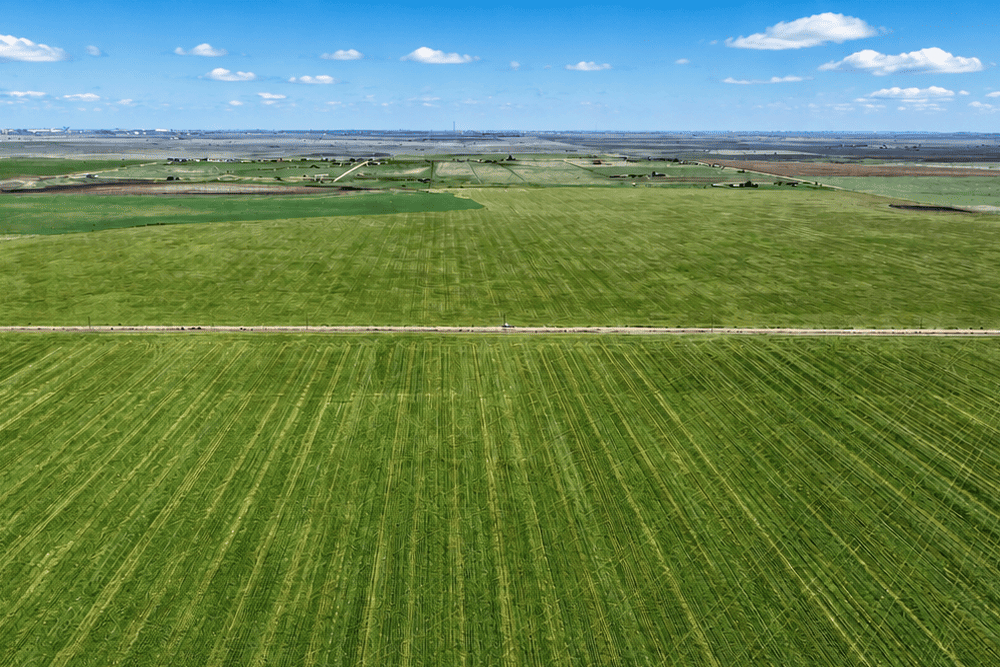
Owner-financed 10-acre land with the deed recorded with the county clerk at closing.




Frequently asked questions
Is owner financing legal in Texas?
Yes. Owner financing is legal in Texas. The Texas Property Code sets notice rules for land sales and adds extra buyer protections for contracts for deed on land used as a residence. Have a Texas real estate attorney or title company review any contract before you sign.
What is a contract for deed, and is it legal in Texas?
A contract for deed (the Property Code calls it an executory contract for conveyance) lets you pay over time while the seller keeps legal title until you finish paying. It is legal, but when it covers land used or to be used as your residence, Subchapter D of Chapter 5 of the Property Code applies, with required disclosures, a 14-day right to cancel, recording rules and default protections.
What protections does a buyer have under Texas owner-finance law?
Under a residential contract for deed, the seller must give a survey, title documents, a property-condition notice, a tax certificate and a financing statement before you sign. You can cancel within 14 days, and you get written notice and at least 30 days to cure a default. After you pay 40% or 48 months of payments, or once the contract is recorded, the seller must use a trustee sale process with at least 60 days to cure.
What disclosures must a Texas land seller give a buyer?
It depends on the land and the sale. Contracts for vacant land must include a bold notice about possible additional taxes if the land has a special appraisal, such as an ag valuation (Section 5.010). Most sellers must give a notice about possible city annexation (Section 5.011). A seller of unimproved land to be used for residential purposes must disclose the location of any transportation pipeline, unless a title commitment exception applies (Section 5.013).
What should I look for in an owner-finance land contract?
Check the legal description, the price and every financing term in writing, late charges and grace period, how default and cure work, whether you can pay off early, who pays taxes, what you may do on the land, when the deed is delivered and recorded, and whether you get a survey and a title policy.
Do I get the deed when I buy owner-financed land from Victory?
Yes. With Victory, the deed is recorded with the county clerk in your name at closing, and Victory holds the lien until the land is paid off. Ask us for a copy of the documents before closing so you or your attorney can read them.
Questions about the paperwork?
Our local team will walk the land with you and go over the purchase agreement before you sign.
Book a land tour Call or text 806-606-0824Follow Victory Land Sales


New land, buyer tips and stories from the field.
About the author
Bo “Knows Dirt” Birkeland, VP of Victory Land Sales
Bo Birkeland is all about land (it's in his name!), real estate, and helping people find their perfect spot to call their own. As the sales leader of Victory Land Sales, he connects buyers with great properties, whether for building, investing, or just having a place to escape. He knows firsthand the freedom that comes with owning land and loves helping others find their own slice of it.